
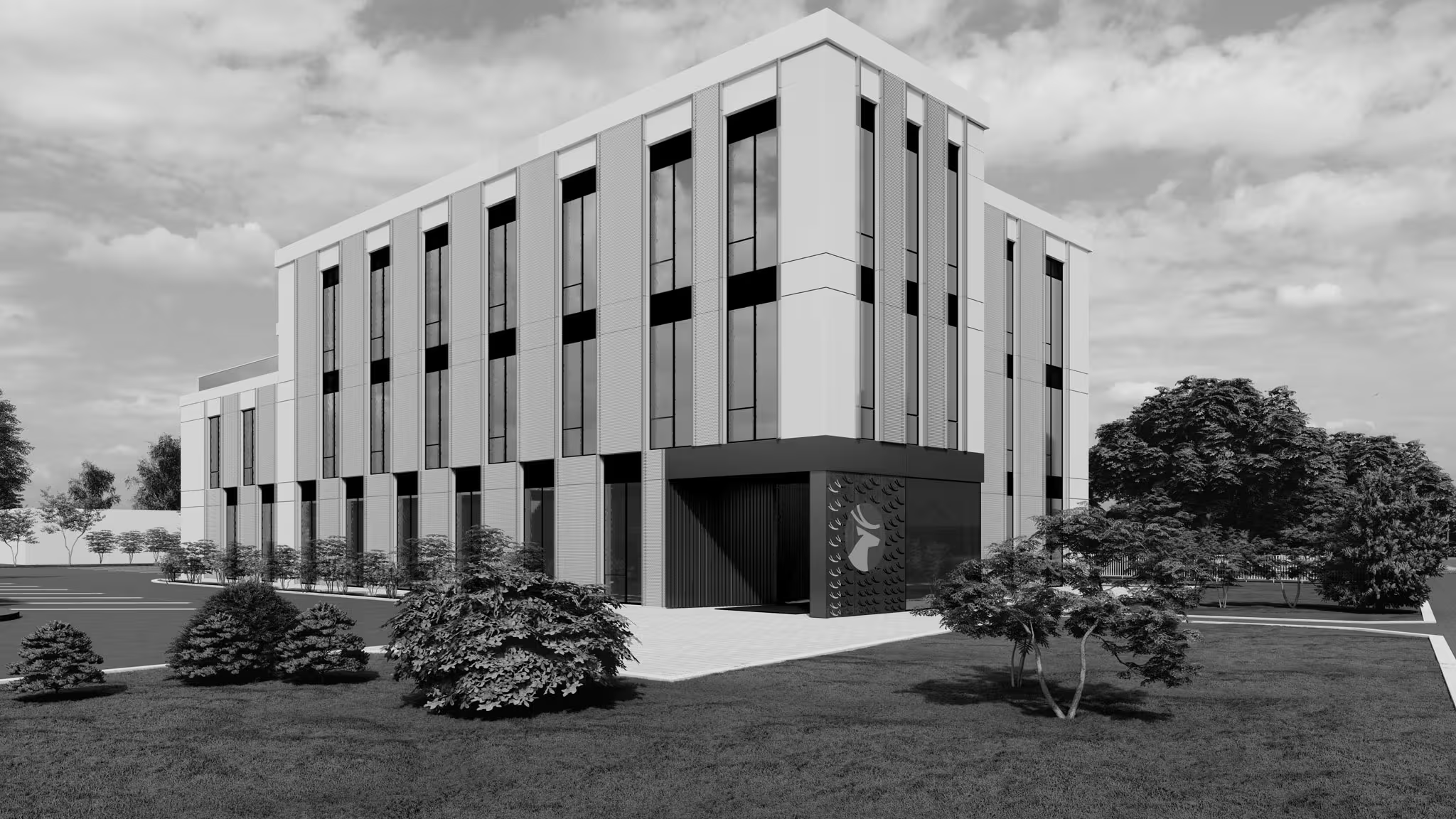
Architecture Design for Public, Industrial, Residential and Historic Projects
Architecture shapes the places where people live, work, gather and grow. At Barbara Bula Arhitekti, architecture design relies on a careful balance between context, function and human experience.
Our studio works across several architectural fields, designing buildings that respond to their surroundings while meeting the technical and spatial demands of daily life. Each project is developed through detailed analysis of place, structure and everyday use, ensuring that architecture remains meaningful and durable over time.
Our architectural work focuses on four main areas:
- Public Architecture for buildings that support community life and civic identity
- Industrial Architecture for production facilities, science parks and technology campuses
- Private Architecture for homes shaped by lifestyle and landscape
- Historical Building Renovation for the preservation and transformation of heritage architecture
Together, these disciplines form an architectural practice where each project contributes positively to its surroundings and the people who experience it.
01Public Architecture
Public buildings shape the life of cities and communities. Libraries, sports facilities, cultural institutions and civic buildings become places where people meet, learn and share experiences.
Designing a public building requires strict attention to the surrounding area and daily operations. By carefully calibrating the scale, materials and open spaces, these structures settle into their locations naturally and become lasting parts of the city.
Explore our work on the Public Architecture page.
02Industrial Architecture
Industrial buildings have to meet extreme technical demands while keeping the space easy to navigate. Production facilities, logistics centers and technology campuses require a precise organization of workflows, heavy infrastructure and employee workspaces.
The industrial architecture process structures production zones, research labs and administration areas into clear architectural systems. The resulting facilities run efficiently and provide high-quality workspaces that encourage collaboration.
Explore our work on the Industrial Architecture page.
03Residential Architecture
A successful private home directly reflects the exact daily routines of the people living there. A house must feel intuitive to navigate and maintain a strong link to the outdoors.
The residental architecture process begins by analyzing the specific landscape, natural light and the lifestyle of the residents. Organizing the rooms clearly and linking indoor areas with the outside results in homes that support everyday life while maintaining architectural clarity.
Explore our work on the Private Architecture page.
04Historical Building Renovation
Historic buildings hold immense cultural value and architectural memory. Renovating them demands a strict balance between respecting their history and upgrading them to meet current technical standards.
The historical building renovation focuses on preserving original architectural details while installing new building systems. Through exact and measured updates, historic buildings gain a second life while retaining their original identity and character.
Explore our work on the Historical Building Renovation page.
Guiding Principles in Architecture Design
Although the projects range from civic buildings to private homes and historic renovations, they share the same foundational rules.
Architecture design at Barbara Bula Arhitekti is guided by:
- designing specifically for the site context and landscape
- keeping spatial organization clear and logical
- ensuring absolute technical precision and physical durability
- making decisions that promote long-term sustainability
- creating spaces that actively support the daily needs of users
Through this approach, architecture becomes more than a building. It becomes an environment that supports everyday life, strengthens its surroundings, and remains relevant for generations.