

Buildings are not static objects, they are living organisms that evolve over time. The project at 5 Alīses Street in Riga stands as a vivid example of this evolution, a journey that required us to bridge the gap between a 19th-century legacy and 21st-century necessity.
Standing in the Shadow of History
Located in the vibrant Āgenskalns neighborhood, the building sits in the shadow of the iconic water tower, a dominant landmark of the Pārdaugava skyline. Originally completed in 1899 by the renowned architect Edgars Voldemārs Frīzendorfs, the structure is a testament to the eclectic character of turn-of-the-century Riga.
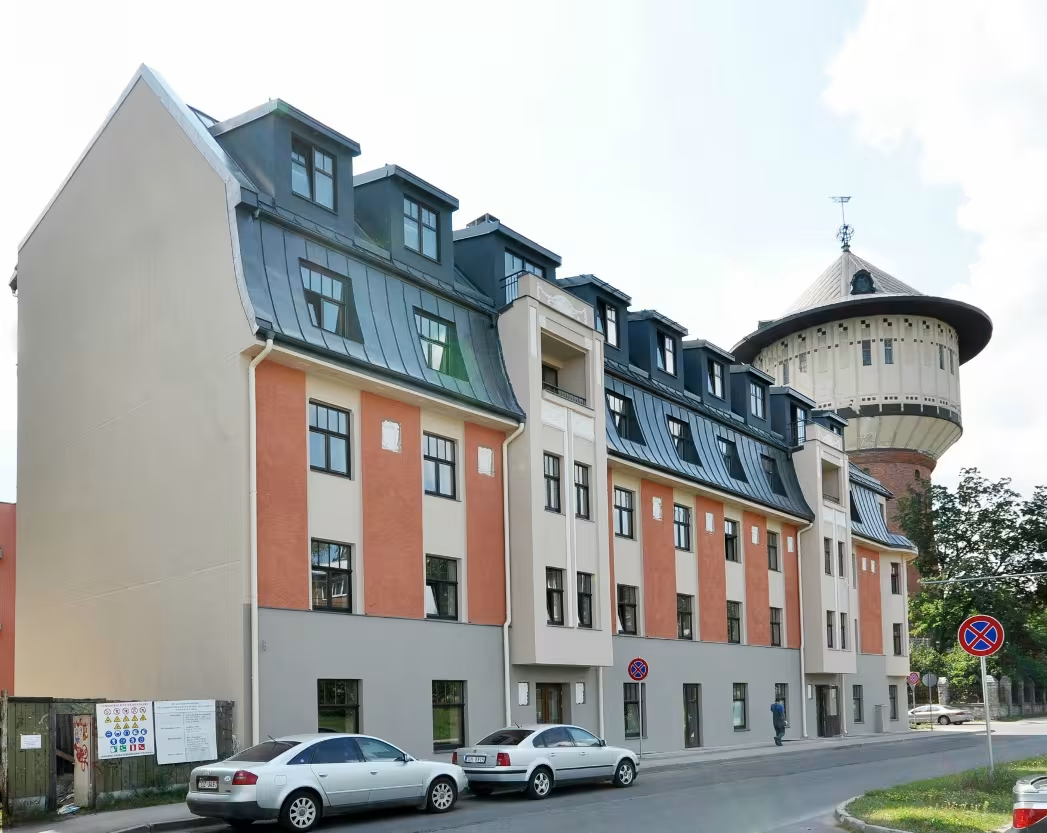
Working on a building designed by such a master is a privilege, but this project presented a unique twist. Architecture is typically a linear process including concept, design and construction. However, reality is often more chaotic. We joined this project mid-stream, after the reconstruction had already begun. A new roof and attic build-out were already in place, creating a rigid geometric framework we had to accept. Our task was to take this "inherited" shell and infuse it with logic, comfort, and aesthetic coherence.
Carving Modern Homes from Ancient Stone
The scale of the building is massive, spanning 3,000 square meters. Our primary challenge was "parceling" reconfiguring a floor plan designed for a different era into apartments that meet modern market demands.
Led by Barbara Bula and Jūlija Skobelkina, we navigated the complex puzzle of existing masonry walls to carve out a diverse mix of living spaces. We created everything from compact 30-square-meter studios to spacious family apartments, ensuring a vibrant mix of residents such as students, young professionals and families could coexist under one roof.
A Visual Timeline
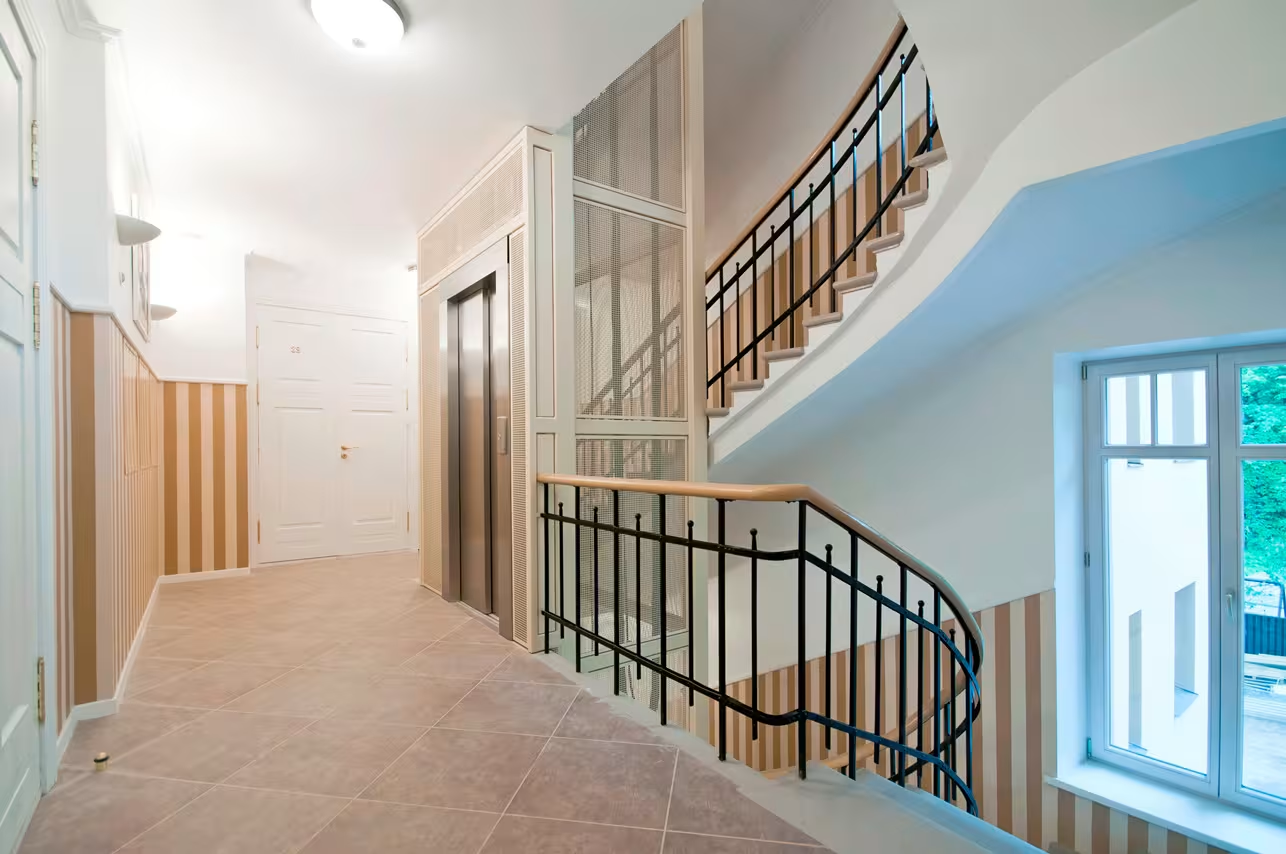
Integrating modern conveniences into a heritage structure requires a delicate touch. We inserted new elevator shafts into the stairwells, designing them to sit quietly alongside the ornate historical banisters. This juxtaposition creates a visual timeline, showing the progression from the pedestrian era of 1899 to the mechanical era of today.
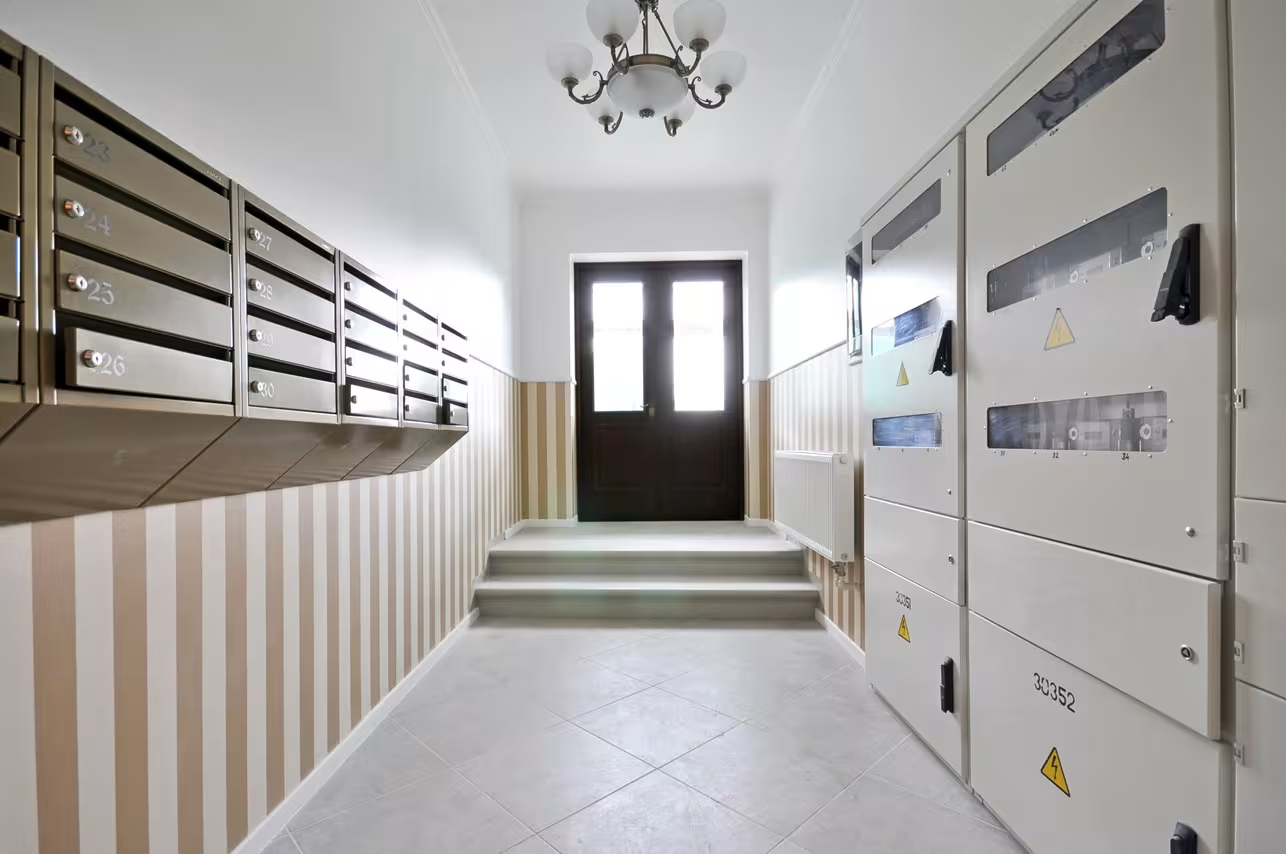
In the common areas, we used a striped wallpaper motif that references the classical aesthetic of the past while adding a crisp, modern rhythm.
A Gift to the Street
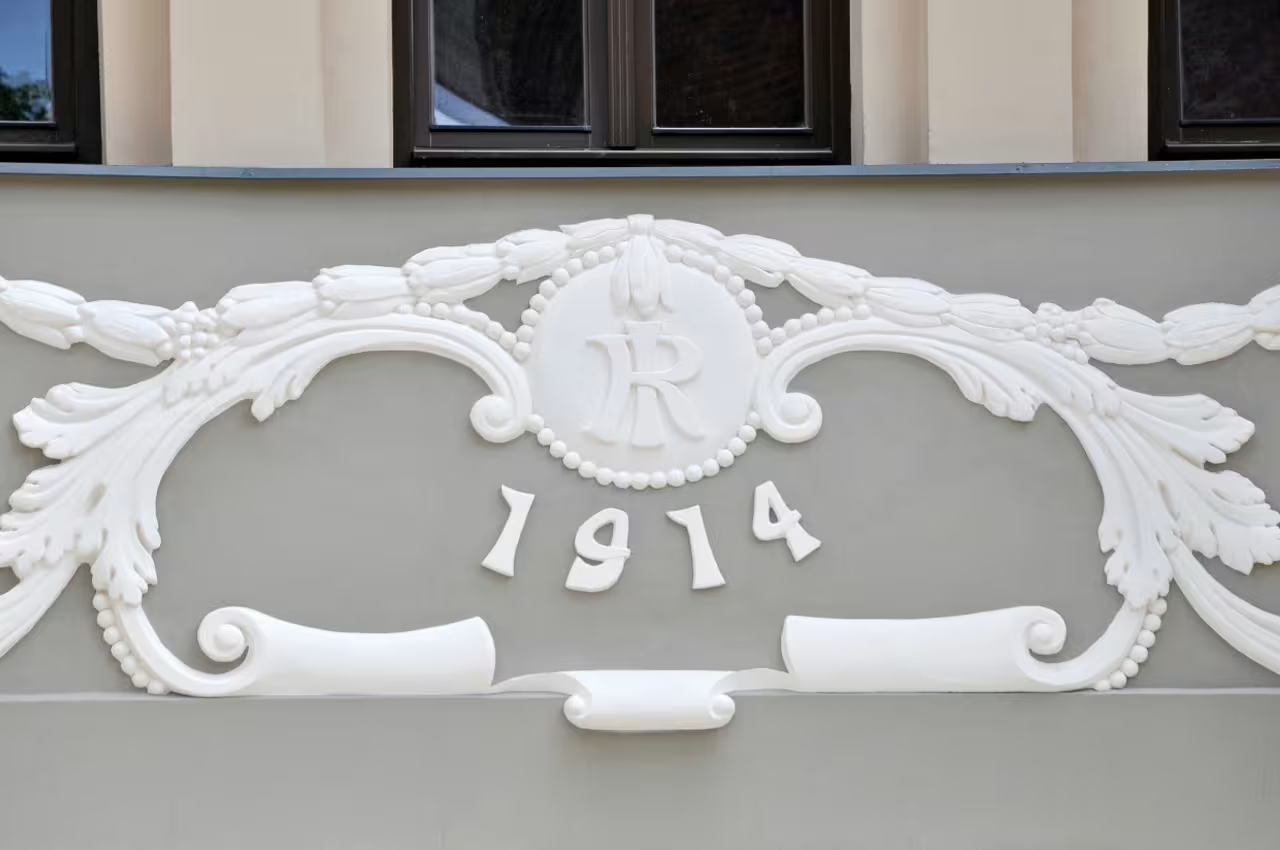
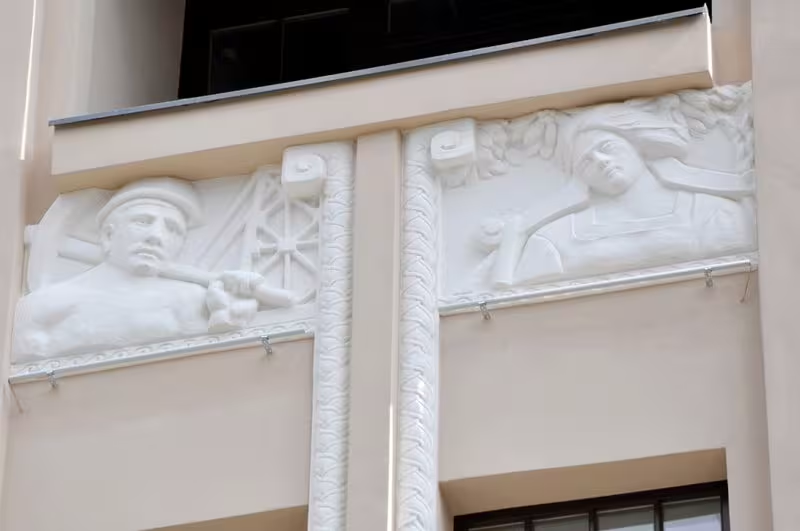
We believe that a building's facade is a gift to the public realm. Over the years, 5 Alīses Street had lost much of its luster. We restored its dignity using a palette of warm terracotta and soft beige tones. These colors highlight the architectural plasticity of the pilasters and cornices, drawing attention to the unique sculptural reliefs of workers and craftsmen a silent stone witnesses to Riga's industrial history.
More Than Just Decoration
There is a misconception that renovation is merely about decoration. Our work here was a fundamental exercise in engineering and spatial planning. We resolved thermal bridging issues from the pre-existing roof, coordinated new utility systems within ancient walls and ensured fire safety compliance.
Completed between 2012 and 2016, this project transformed a problematic construction site into a high-quality residential complex. It confirms our belief that architecture is ultimately an act of service, serving the client by maximizing value, serving the residents by creating homes and serving the city by preserving its heritage. The Alīses Street building is now ready for its next century of life.
Why this project matters professionally
From a professional architectural perspective, the Alīses Street Renovation serves as a case study in "Adaptive Constraints Management."
Most architectural case studies focus on projects where the architect controls the vision from day one. This project highlights a common but difficult reality in the industry: taking over a project mid-construction. Barbara Bula Arhitekti had to work backwards from a solution (the already-built roof) to solve the problem (livable floor plans).
It is also a strong example of "Typological Conversion." The building was successfully transitioned from large, 19th-century dwelling layouts to a high-density mix of micro-apartments and family units (30m²-100m²), which is critical for the economic viability of historic real estate in modern cities.